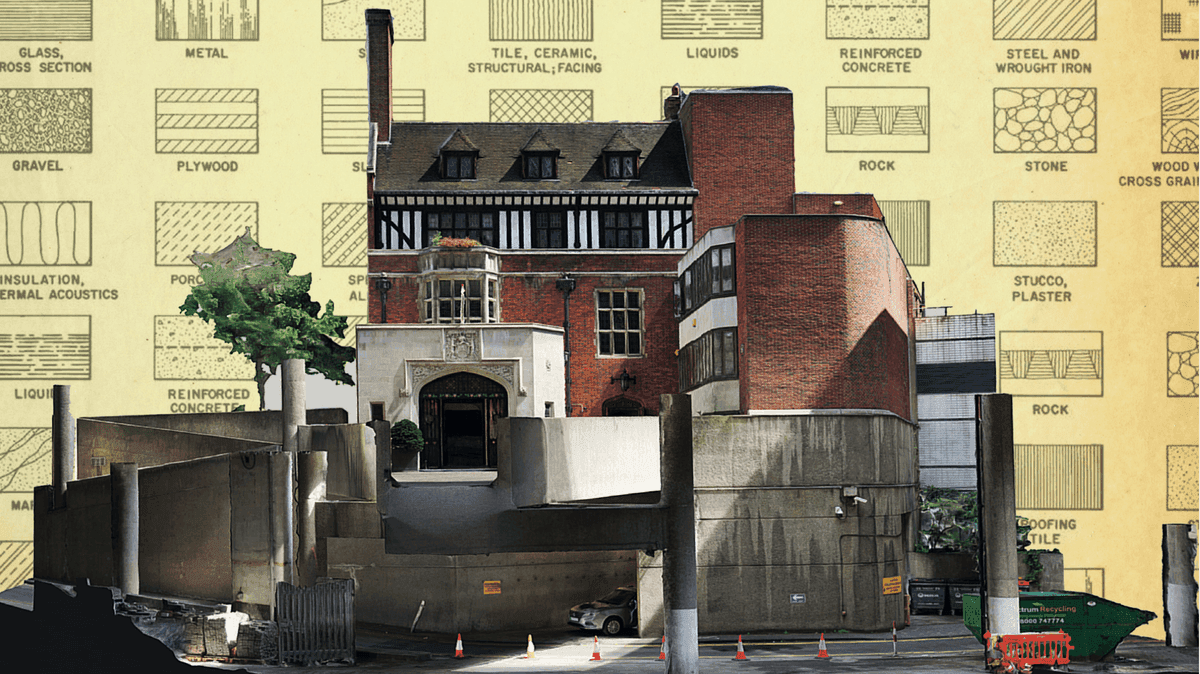
The Carbon Tectonic
The Carbon Tectonic
Overview
How should architecture understand its role in the project of environmental transformation? Faced with the looming disaster of climate change, societies all over the world will have to transform their
How should architecture understand its role in the project of environmental transformation? Faced with the looming disaster of climate change, societies all over the world will have to transform their industries, technologies, food and energy systems over the next thirty years. What role can architects play in this vast global endeavour?
Unit 7 is interested in the possibilities of design in an era of rapid and essential change. The question is not simply how architecture can contribute to necessary shifts in consumption and environmental impact, but how larger processes of climate mitigation might shape its room for manoeuvre — its space of possibility.
What sorts of buildings will be needed in a decarbonising world? What new forms of design, organisation or urban life will become possible? The answers to many of these questions remain, crucially, undetermined. They may lie in local transformations and community-led design, or in the remote systems of planetary material supply chains and energy systems. We invite students to explore how their own design agenda might take shape at the intersection of the complex processes.
We're interested in construction materials and the supply chains and processes that produce them. For an architecture which seeks to be less environmentally damaging, questions about how buildings are made are unavoidable. But we also think that materiality is a productive way of thinking and speculating about the future, and of producing new forms of architectural expression.
The agenda of the unit is to think through the process of environmental transformation, between now and 2050. The possibilities of architecture are always constrained by the energies, technologies and products which exist with which to build it. We invite students to develop their understanding of, and locate their own work within, the systems, material flows and carbon economies that might operate between now and thirty years' time.
The type of architecture that we're particularly interested in is thus tectonic — in the sense that it is concerned particularly with the building as something assembled out of pieces of material. In this year's projects, we will discover how investigations of production, sourcing and assembly can lead to buildings which are expressive, civic, purposeful, highly individual and rooted in a definite understanding of the uncertainty and urgency of our shared future.
In Plain Sight
What is a building really made of?
At one level, the answer is just a long and highly specific list. But when we consider how buildings are described or talked about, some items on that list seem to be emphasised, while others are suppressed. Or to put it another way, the material reality of buildings from the point of view of architecture, can sometimes seem to be subject to a kind of selective invisibility.
While at different points in history, the grandeur of stone, the poetry of brick, the daring flexibility of reinforced concrete or the ethereal transparency of glass have had the support of one or more architectural styles or movements, the majority of materials in construction have had however, no such justification. Their only defenders are ease of use, cost, interoperability, ease of sourcing. This term we invite students to discover how buildings are really made.
Material and Urban Futures
The best response to the environmental crisis may be a much more literal understanding of what a building is. When we think through the material reality of buildings, we are most closely in touch with their effect on the planet.
In this sense, we are interested in construction and architecture at its most 'basic' - in its reducing the systematic and technology burden that contemporary construction is producing for future generations.
P1. Material Intersections
We will begin by locating and documenting the materiality of city, selecting areas where material tectonics and functions intersect. Students will analyse these urban sections in a variety of ways, reconstructing the complex web of supply chains and processes which have been brought together on the site, in turn scanning, reconstituting, remodelling and redrawing the elements which collide. What will you unearth? And what new design languages and material agendas will emerge from this study?
Weeks 1-4
- Start by identifying a 1m3 "material intersection" somewhere in London which will be your area of study
- Create a detailed and complex assembly drawing identifying every element in that intersection
- Week 2 - Produce a sketch assembly drawing and supporting research (e.g. 3D scans) with all materials identified
- Week 4 (pin up) - produce a detailed 'assembly drawing' exploring the intersecting material flows which created that area, focussing on one or two key materials in particular
- (1:5 scale at A1, or other format as agreed with tutors)
Weeks 5-10
Having identified a material of interest, design a small building. Y2 + Y3: Final output 1:20 Scale Model
The Trip: Tbilisi, Georgia
Tbilisi is a city where material and political contexts for architecture overlap. Visiting Georgia brings us into contact with some of the worlds most important archaeological sites, centuries of traditional craft and food cultures, the legacy of a soviet industrialisation through to the contemporary reassessment of its rich and complex social history.
- Outdoor Museum of Ethnography (Vernacular Architecture Museum)
- Visit Soviet Era Landmarks and Microrayon, including the Ministry of Transport Building & various ancient religious sites
- Workshop with Elena Darjania, United Nations DP Accelerator Lab
P2+P3. Civic Urban Architecture
In the second part of the year, we will develop civic architectures which contribute to the growth and renewal of the city. We will direct our research into materials and processes into the exploration of new architectural expressions and languages. Programme is understood to be a function of material potential and responding to the real demands of urban life, citizens and cities.
The interface between a building and the city around it - and the facade as the connection between one and the other - will be a particular focus and a route into the problem of the civic building as a whole. We will develop these through the continued use of large scale models, through textures, sectional details and elevations.
What should a civic building in an age of ecological transition be like? How the different aspects of its construction, maintenance, programmed activity or creation of public amenity help form an environmentally viable and humane urban environment? How can an understanding of time and future uncertainty be internalised as a creative and productive force?
P2 - Develop a small facade on an urban site
P3 - (2nd years) develop a small civic building on an urban site
(3rd years) develop a complex civic building on an urban site