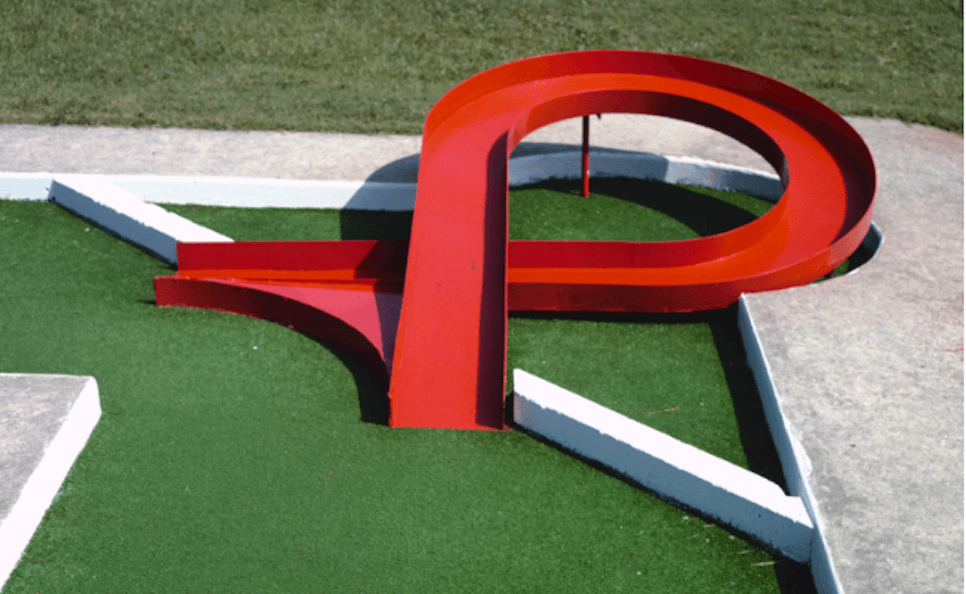
Critical Paths
Critical Paths
Overview
The production of building materials places an insupportable load on the planetary environment. But from the perspective of an individual designer, the question of how best ot mitigate the effects of their own consumption can be elusive. Abstractions like ‘carbon footprint,’ separated as it is from broader ecological relationships, can only ever be a provisional solution.
This year UG07 will explore decision making and creativity in circumstances outside of our control.
In hindsight, a completed project often seems to have come into being as a singular, brilliant idea. In reality, this is rarely ever so straightforward. Processes matter more than concepts, judgement and repetition more than inspiration. Choices may well be formative, but they're rarely made in full knowledge of their ultimate effects. The worlds we work within are path dependent — shaped and constrained by all the decisions, good and bad, that came before.
How should we make best use of our limited and situated agency as designers? Critical Paths will explore of architecture as a process of decision-making, both collective and individual, within circumstances outside of our control.
We invite students to consider the materials and processes they might adopt now, and how these resources might contribute to their own future practices and the sorts of projects they want to see in the world.
P1. Everything, Everywhere, All At Once
Generate
6+1: Series of short, rapid-fire architectural briefs.
Concentrate
Evaluate and distill these responses into a single project
Resolve
Refine these core ideas into a 1:20 model that expresses a clear materiality + tectonic.
For the first few weeks of P1 students will address a series of rapid-fire, stand alone architectural briefs, prioritising experimentation and the quick production and communication of ideas.
These six mini-briefs will explore fundamentals of spatial design, material thinking and ecological necessity, generating a catalogue of potential future paths of further exploration.
We will ask students to shift quickly between ideas and modes of architectural production, creating space for useful failures and speculations before identifying a primary individual concern.
Final Outcome — Model City
We will develop these proposals through a series of rapid physical sketch models, material experiments and prototype assemblies, before culminating in a final 1:20 presentation model.
Together these propositions form a speculative 'Model City', a collaborative showcase of the emerging range of technical and structural experiments drawn from our P1 experimentation.
The Trip: Rhone Valley
8-13th January
Our trip will visit the Rhone valley in France by train, a historic centre of stone and earth architecture, ancient cities, novel infrastructures and contemporary centres of material research.
We will visit a number of key buildings and architectural sites engaged with the question of post-industrial urban production and alternative materials systems, beginning in Lyon and ending in Arles with visits including:
- CRAterre (The Center for the Research and Application of Earth Architecture) Grenoble
- LUMA Center and Atelier Luma, Arles
P2 + P3. Material Languages and Urban Buildings
Driven by material research, experiments and construction methods
Special focus on supply chains & energy systems
London-based site
For an architecture which seeks to be less environmentally damaging, questions about how buildings are made are unavoidable. We invite students to develop their understanding of, and locate their own work within, the systems, material flows and carbon economies that might operate between now and thirty years' time.
A key response to the environmental crisis may be a much more literal understanding of what a building is. When we think through the material reality of buildings, we are most closely in touch with their effect on the planet. In this sense, we are interested in construction and architecture at its most 'basic.'
P2 - Key Outputs
- Site investigations and analysis led by the development of civic facades
- Prototyping a material system and tectonic at building scale
- Develop a civic building proposal for an urban site
P3 - Key Outputs
Resolution of the building project, synthesising the material, programmatic and systematic ideas developed in P2 into a cohesive and comprehensive civic proposal
Key Skills and Approaches
- Working and researching collaboratively. We invite students to consider themselves as a think-tank, researching emerging materials and techniques collectively and sharing their findings in the studio.
- Thinking through hand-sketching at all stages of the design development process.
- This year will include workshops on physical model making in conjunction with digital manipulation of textures, materials and rendering (Rhino / Photogrammetry / Blender / Unreal Engine)