Here Comes The Sun
Here Comes The Sun
Overview
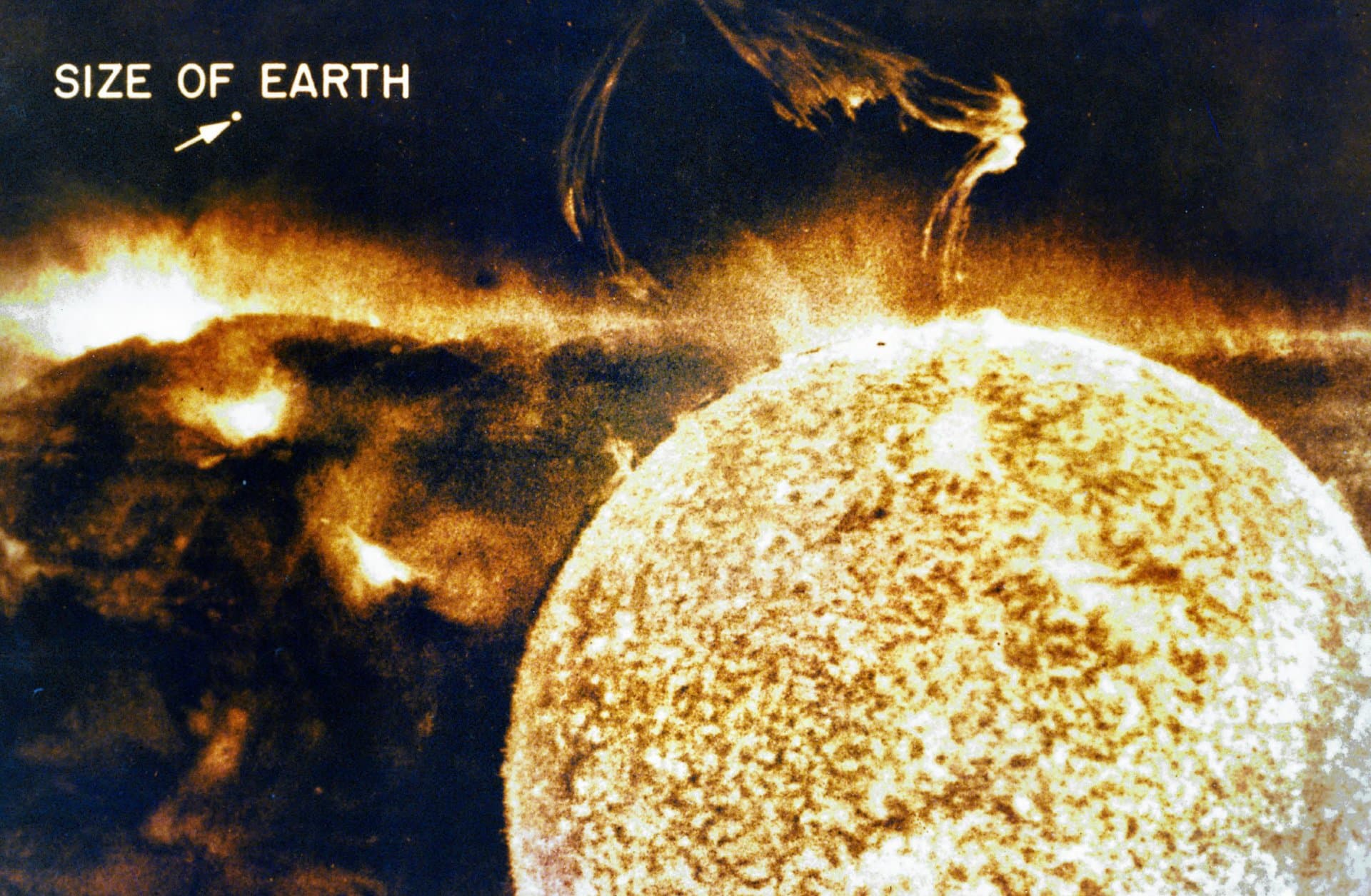
Every second our local nuclear fusion power station and G2 V type yellow dwarf - aka the Sun - converts 620 million tons of hydrogen into 616 million tons of helium. The remaining 4 million tons will burst into electromagnetic energy that we know as sunlight.
Radiated in all directions, just one of every 2.2 billion photons will travel in a direction towards us and yet such is their volume that enough will arrive for 120,000TW of heat energy to be absorbed by the Earth, sustaining both our finely tuned biosphere and powering all the life within it.
While of course never looking directly at it, the Sun is at once an object of worship, of deep cultural and social symbolism, the metronome by which we organise the days and years of our lives and perhaps the original architectural client.
In the current era, as the atmospheric warming of climate change progresses at pace, we may also be increasingly aware – and potentially wary of – its presence.
This year UG07 invites students to set controls for the heart of the sun - expanding our collective notion of solar orientation to include both the cosmically local and locally cosmic in search of new earth-based architectural propositions driven by heat, light, shade, shadow, human physiology, deep time, deep space and ritual.
...in the middle of everything is the sun. For in this most beautiful temple, who would place this lamp in another or better position than that from which it can light up the whole thing at the same time?
Nicholas Copernicus, "De Revolutionibus (On the Revolutions)," 1543 C.E.
Locally Cosmic / Cosmically Local
A key consideration will be orientation – not only how we position ourselves and our structures with respect to the actual energetic potential of the sun- it's light, heat and movements - but how we as designers reimagine our solar relationships at the scales of both the local communities in which we live, and the local solar system in which we exist.
Students will be asked to undertake research and making exercises that situate our sensory experiences of the environment as a civic gesture of public space and exploring the city as a field of microclimates. Students will use building materials and tectonics as tools for making space – from photon to body, from street to orbit, from cloud cover, to seasonal transitions and proposing building fragments as instrument to calibrate light, shade, heat, airflow and energy flux and finding new tools for making, new forms for looking and new modes of orientation.
Solar Intersections (P1)
We will begin the year by locating a 3m² fragment of a building envelope—a window, a junction of wall and rooflight, a layered threshold. Through careful looking and recording (photographs, sketches, measured drawings, 3D scans), we will seek to uncover how this fragment holds and filters the world: how it gathers sunlight, leaks air, absorbs sound, sheds water. From this close reading, we will imagine how the assembly might be amplified, adapted, or transformed, proposing new ways to mediate between body, material, and environment.
The Expo
We will then develop a structure, pavilion or a fragment of a larger whole, as a distillation of the material logic that has begun to be uncovered through individual interests and research. Through this we seek to test how construction itself can carry atmosphere—how a joint, a surface, or a sequence of elements might gather light, hold air, or register touch.
Moving quickly between drawing, modelling, and material experiment, failure and speculation are encouraged as part of the search. The work will seek to resolve itself as a 1:20 model, assembled alongside others to form a collective Expo in a Solar City: a field of propositions sited in Greenwich that explore the sensory, cultural, and tectonic dimensions of building.
The Trip: Porto
Our field trip will be to Porto, Portugal to explore the deep historical, political and social entanglements of the Atlantic port city—its granite craft, steep topography and contemporary urban transformation. We will visit the OMA's Casa da Música; survey a constellation of works by The Porto School (including Távora, Siza, Souto de Moura) alongside the nineteenth-century iron bridges and contemporary infrastructure and day trips to Guimarães and local manufacturing sites. Porto's historic quarters and recent public projects will reveal diverse vernacular and contemporary strategies for calibrating life in the city's wet, windy seasons.
Civic Urban Architecture
Buildings do not arrive in isolation but as the result of a complex interplay between material economies, social dynamics and creativity.
We encourage students to find their own unique methods of developing designs and making, connecting with communities, practitioners and industry experts to shape projects that have professional credibility and resonance within concerns of the wider industry. In previous years, staging participatory workshops, organising large-scale fabrication, interacting with suppliers and building new tools both physical and digital.
We invite students to work collaboratively and to consider themselves as a think-tank, researching emerging materials and techniques collectively and sharing their findings in the studio. Students can draw from our archive of collective organised unit research including archives of articles, books and environmental and material data generated by previous years of UG07 students.
Physical & Digital Techniques
This year UG07 will give special focus to methods of digital fabrication, manufacturing and production. We will begin the year a collaborative workshop on digital plotting, 3D printing and laser cutting with the aim of integrating precise and experimental fabrication into outputs from the outset of P1.
UG07 gives emphasis to drawing, spatial diagrams and physical making as key skills for architectural communication in support of helping students establish their own visual, technical and digital languages.
Systems & Tectonics
Students in UG07 are asked to use materials inventively as the generator of architectural form and language. We invite students to consider how their designs are physically made and to speculate experimentally through the lens of construction systems and tectonics, towards cultivating a professional understanding of the supply chains and ecological realities of contemporary architecture.
Mitigation, Adaption.. Other?
The context of these investigations is the unavoidable reality of global climate change and the uneven experience of its effects. The scientific consensus implies that we must now consider both how to mitigate and reduce the impacts of the our energy and material consumption in parallel with the development of strategies to adapt and respond to their consequences.
The Expo
Every year at the end of Term 01 students of UG07 stage The Expo, a pop-up micro exhibition of 1:20 models and material tests to reflect on how their ideas, spatial propositions and tectonics relate across both the unit and the tradition of architectural experimentation of world fairs and expos.
Skills Workshops
- Digital Processes for Making & Manufacture
- Site Analysis (Topology & Mapping)
- Model Photography & Scene Setting
- Solar & Environmental Analysis
- Rhino & Grasshopper for Modelling
- Real-time Rendering & Materials For Y2 the digital skills sessions are arranged around developing speed and fluency in core representational and design tools including Rhino, Blender, Adobe Suite.
For Y3 we set the stage for more advanced rendering, animation and simulation techniques, supporting both technical knowledge and building a portfolio of professional skills.
This involves a series of workshops including Rhino, Blender, Real-time Rendering, Photoshop and Illustrator alongside more technical explorations of Grasshopper, 3D scanning and simulation.
Core Software
- Rhino (+ Grasshopper)
- Blender + Cycles
- Adobe Suite (Indesign, Illustrator, Photoshop)